Singapore is entering a critical phase of population ageing. By 2030, one in four Singaporeans will be aged 65 and above. In response, the Government is strengthening healthcare financing to ensure seniors can afford long-term care without over-relying on family support.
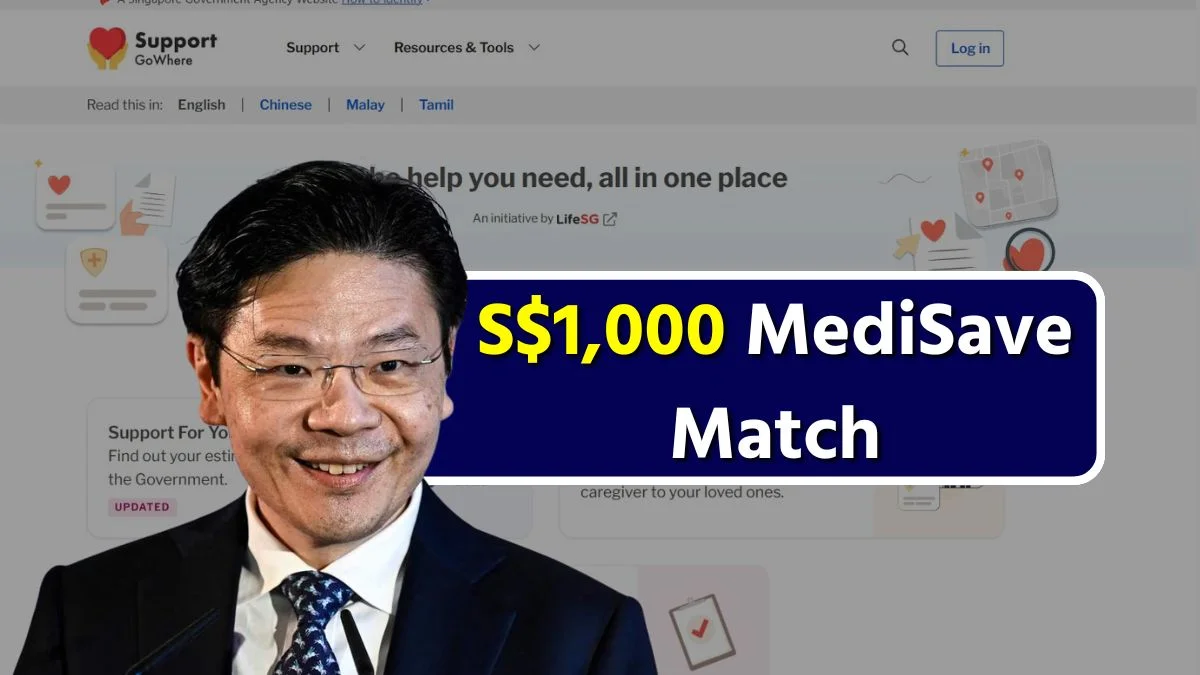
One of the most impactful measures announced is the S$1,000 MediSave Match for Seniors (MMSS). From 2026, eligible seniors will receive a dollar-for-dollar MediSave top-up match, directly enhancing their MediSave balances and allowing them to enjoy higher CareShield Life payouts when they need long-term care.
This policy is not just a subsidy—it is a strategic financial planning tool for retirement healthcare, long-term care insurance, and ageing-in-place support.
What Is the S$1,000 MediSave Match for Seniors (MMSS)?
The MediSave Match for Seniors (MMSS) is a government co-contribution scheme designed to encourage seniors to build up their MediSave savings.
Under MMSS:
- The Government matches cash top-ups made by eligible seniors into their MediSave accounts.
- The matching amount is capped at S$1,000 per year.
- The matched amount goes directly into MediSave and can be used for approved healthcare expenses.
This initiative is administered by Ministry of Health and works in tandem with national healthcare financing schemes such as MediShield Life and CareShield Life.
From 2026: Why MMSS Matters More Than Ever
Starting 2026, MMSS takes on greater importance because it directly supports higher CareShield Life payouts.
CareShield Life is Singapore’s national long-term care insurance scheme, providing monthly cash payouts if a person becomes severely disabled and needs long-term care. Payouts increase over time to keep pace with inflation and rising care costs.

By boosting MediSave balances through MMSS:
- Seniors can afford higher CareShield Life premiums
- This translates into higher monthly payouts when claims are made
- Seniors gain stronger financial independence in old age
In short:
More MediSave today = higher CareShield Life protection tomorrow.
Eligibility Criteria for MediSave Match for Seniors
To qualify for MMSS, seniors must meet specific eligibility requirements set by the Government.
Key Eligibility Conditions
- Singapore Citizen
- Aged 55 years and above
- Annual income and property ownership within prescribed limits
- MediSave balance below the Basic Healthcare Sum (BHS)
Eligibility details are assessed automatically using Government records, so no application is required for most seniors.
How the S$1,000 MediSave Match Works (Example)
Let’s look at a simple example:
Mr Tan, age 68, tops up S$1,000 cash into his MediSave account in 2026.
- His MediSave increases by S$1,000
- The Government matches S$1,000 under MMSS
- Total MediSave increase: S$2,000
This additional MediSave can then be used to:
- Pay CareShield Life premiums
- Cover MediShield Life premiums
- Fund approved outpatient treatments and hospital bills
Impact on CareShield Life Payouts
Why Higher MediSave = Higher CareShield Life Payouts
CareShield Life premiums are paid using MediSave. Seniors with insufficient MediSave balances may only qualify for lower-tier payouts.
With MMSS:
- Seniors can maintain consistent premium payments
- They can opt for supplementary CareShield Life plans
- This leads to higher monthly payouts, potentially exceeding S$1,000 per month in future years
This is critical as long-term care costs in Singapore—such as nursing homes, home nursing, and day care services—can easily exceed S$2,000 to S$3,000 per month.
S$1,000 MediSave Match for Seniors (MMSS)
- Retirement planning Singapore
- Long-term care insurance Singapore
- Senior healthcare financing
- MediSave top-up benefits
- CareShield Life payouts
- Elderly insurance planning
- Healthcare subsidies Singapore
- Government healthcare schemes Singapore
MMSS vs Other Senior Healthcare Support Schemes
How MMSS Complements Existing Policies
| Scheme | Purpose | Who Benefits |
|---|---|---|
| MediSave Match for Seniors | Boost MediSave savings | Seniors with lower balances |
| MediShield Life | Basic hospital insurance | All Singaporeans |
| CareShield Life | Long-term care insurance | Severely disabled individuals |
| CHAS | Subsidised GP care | Lower- to middle-income households |
| Silver Support Scheme | Cash supplements | Low-income seniors |
MMSS is unique because it rewards proactive savings behavior rather than providing one-off cash assistance.
Why This Matters for Retirement & Estate Planning
For seniors and families, MMSS should be factored into:
- Retirement healthcare budgeting
- Insurance coverage reviews
- Estate planning strategies
Financial advisers increasingly recommend MediSave optimisation as a low-risk, government-backed way to secure healthcare needs without relying on private loans or family transfers.
Common Misconceptions About MMSS
“I’m Too Old to Benefit”
False. Seniors aged 55 and above can benefit immediately from MediSave top-ups and matching.
“I Can Withdraw the Matched Amount”
No. MMSS funds are locked into MediSave and can only be used for approved healthcare expenses.
“It’s Only for Low-Income Seniors”
Not entirely. Eligibility is income-tested, but many middle-income seniors qualify.
FAQs: People Also Ask (Singapore)
What is the S$1,000 MediSave Match for Seniors (MMSS)?
It is a Government scheme that matches cash MediSave top-ups made by eligible seniors, capped at S$1,000 per year.
When does MMSS start?
The enhanced impact linked to higher CareShield Life payouts begins from 2026.
How does MMSS increase CareShield Life payouts?
Higher MediSave balances allow seniors to pay higher premiums, which results in increased monthly payouts under CareShield Life.
Do I need to apply for MMSS?
No application is usually required. Eligibility is automatically assessed.
Can MMSS be combined with other healthcare subsidies?
Yes. MMSS complements MediShield Life, CareShield Life, and CHAS benefits.
Conclusion: A Smart, Long-Term Healthcare Investment
The S$1,000 MediSave Match for Seniors (MMSS) is more than a subsidy—it is a long-term healthcare investment strategy backed by the Singapore Government.
From 2026, eligible seniors get higher CareShield Life payouts, stronger protection against long-term care costs, and greater peace of mind in retirement.